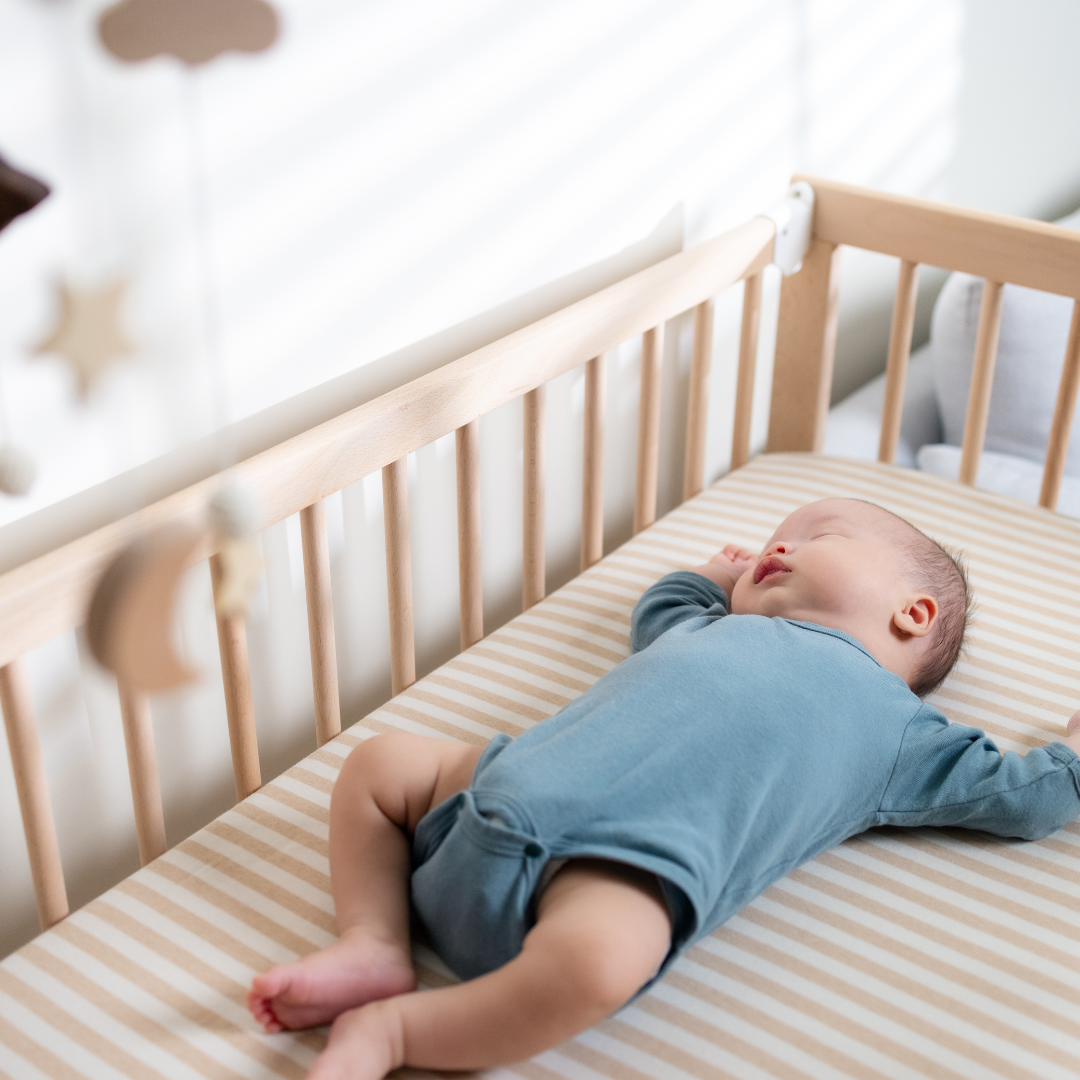
Is your baby in a cycle of taking 30-40 minute naps? You lay them down to sleep, start the laundry or a workout, and next thing you know…you hear a cry. Short naps are challenging for you and your baby. Often, when they wake from these short naps, we know they didn’t get the rest they needed. But how do we get them to sleep longer?
Client Win: From Contact Naps to Crib Success
When Megan reached out, she was feeling overwhelmed and stuck. Her 3.5-month-old was waking 3 to 5+ times a night and could only nap in someone’s arms. She shared:
“I felt like my days were consumed with bouncing him to sleep for 10–20 minutes, holding him, and making sure not to move so I wouldn’t wake him. We had tried everything to help him sleep more independently, but were at a loss.”
After just one night of working together, her baby was falling asleep on his own in the crib for both naps and bedtime. Megan wrote:
“After the first night of working with [Sleeper Teachers], my son was able to fall asleep independently in his crib for naps and nighttime. Would work with [Sleeper Teachers] over and over again!”
The transformation came from understanding sleep development and creating a plan that supported independent sleep in a responsive, consistent way.
Understanding Sleep Science to Help Solve Short Naps
In the first 3-4 months of life, sleep is made up of 2 main stages - and, up to this point, it can work to help our babies get drowsy and still get some sleep. Around 4 months of age, sleep becomes more complex. At this age, it gets increasingly difficult to “help” them get to sleep, and this is when the skill of sleep independence becomes important. Our babies are not born with this skill and it is something that we have to teach them. Until they learn independent sleep, it is normal for them to wake after one sleep cycle and not be able to get themselves back to sleep.
Going Down Awake
In order to learn the skill of independent sleep, our babies must go down for all sleep periods in a completely awake state. This allows them to put themselves to sleep on their own, so that when they naturally wake at the end of a sleep cycle, they know what to do to get themselves back to sleep. If your baby doesn’t react well to being laid down awake for their naps, we recommend parents come up with a plan for how they are going to handle their little one’s protest…and stick to it. Choose a strategy that feels good to your family, and don’t be afraid to seek support if you need it.
Creating the Right Environment for Naps
The environment that you create for your baby to take a nap in is vitally important. There are a few things that can create the best sleep space. First, we want your baby to be in their own quiet sleep space. Using a sound machine is crucial to drown out any noises (both inside and outside) that could possibly disrupt sleep. We also want to make sure the room is very dark to reduce stimulation and encourage melatonin production. Lastly, be sure that the room is 70-72 degrees and your baby is not too hot or cold. Using a sleep sack is highly recommended until they move out of the crib around 3 yrs of age.
How Their Daytime Schedule Impacts Naps
Along with independent sleep and creating the right environment, knowing how much time between each sleep period is needed for their age is critical. These sleep periods are known as “wake windows” and they get longer as our little ones get older. It is important your baby is awake between each sleep period for the correct amount of time. If they have built up enough sleep pressure, they will be able to fall asleep and stay asleep for a long nap. If these windows are too short, it can result in a short nap.
Additional Support for Your Baby's Short Naps
If you have tried these tips and you're still struggling with short naps, it might be time to get some additional help. You can purchase our guide on short naps or seek out 1:1 support with someone from our Sleeper Teachers Team. You can start by booking a free intro call here to learn about what this support would look like.